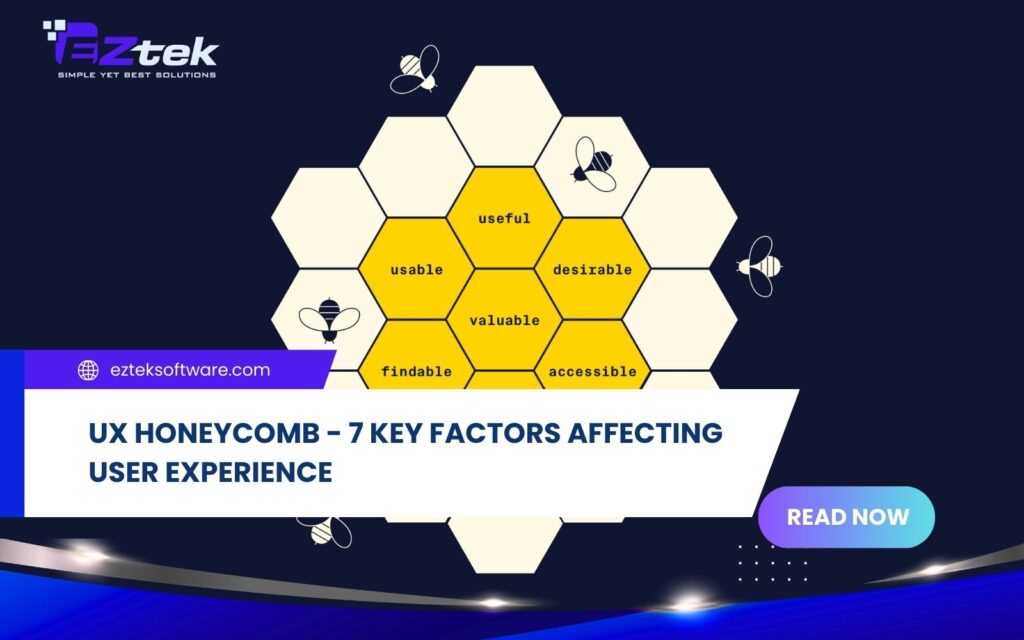
Explore UX Honeycomb Model by Peter Morville
User experience is no longer just about making products look good. It’s about creating meaningful, functional, and valuable interactions. One of the most influential frameworks that helps designers evaluate and improve user experience is the UX Honeycomb. In this article, EZTEK will explain the model, its origin, its 7 facets, practical principles and real UX Honeycomb examples – along with how businesses can apply this framework effectively in modern digital products.
Who is the creator of the UX Honeycomb Model?
The UX Honeycomb framework was created by Peter Morville, a well-known pioneer in user experience and information architecture. He introduced this model to explain that user experience goes far beyond usability and must be evaluated through multiple interconnected dimensions.
As a co-founder of the Information Architecture Institute and co-author of Information Architecture for the World Wide Web, Morville designed the UX Honeycomb to help teams create products that balance user needs, emotional engagement, accessibility, credibility and business value.

Read more: What is UI/UX design?
7 facets of ux honeycomb
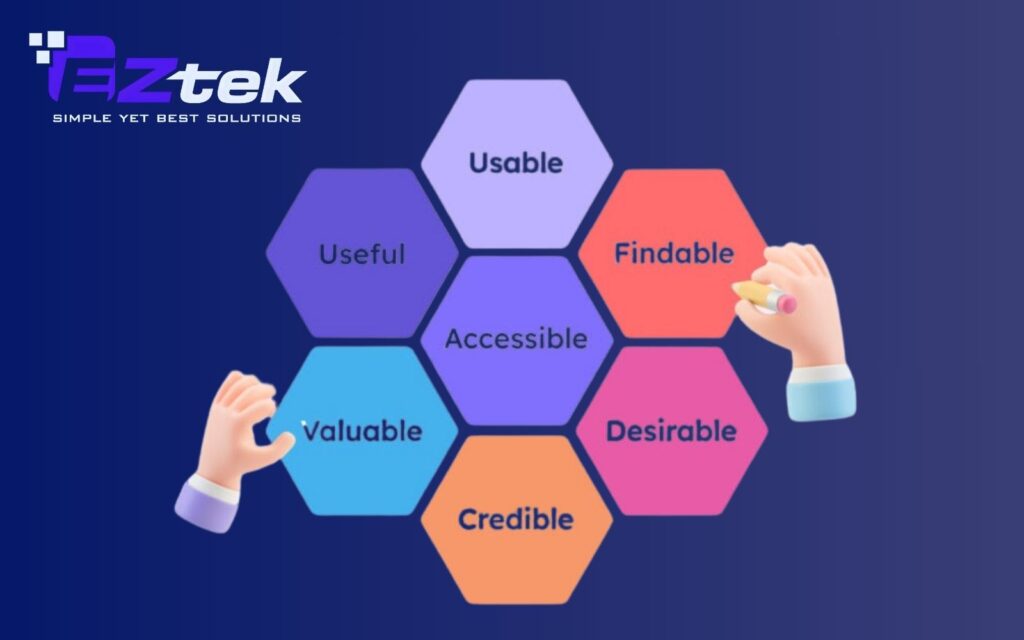
To achieve a truly holistic design, it is essential to explore the specific dimensions defined in the ux honeycomb Peter Morville created. These seven facets serve as a comprehensive guide for teams to evaluate and improve every touchpoint of the user journey.
Useful
In the UX Honeycomb model, a product is considered useful when it clearly addresses real user needs or pain points. This facet asks whether a feature genuinely helps users achieve their goals rather than existing for technical or business reasons alone. Insights from user research, interviews and data analysis are essential to determine usefulness. For example, a budgeting app that automatically categorizes expenses delivers immediate, practical value to users.
Usable
Even the most helpful tool can fail if it is too complex to operate. Usability focuses on how easily and intuitively a person can navigate an interface to complete their goals without frustration. By applying the ux honeycomb framework, teams use prototyping and testing to smooth out learning curves and eliminate friction points. A classic example is a “one-click” checkout process, which makes the act of purchasing effortless and efficient for the shopper.
Credible
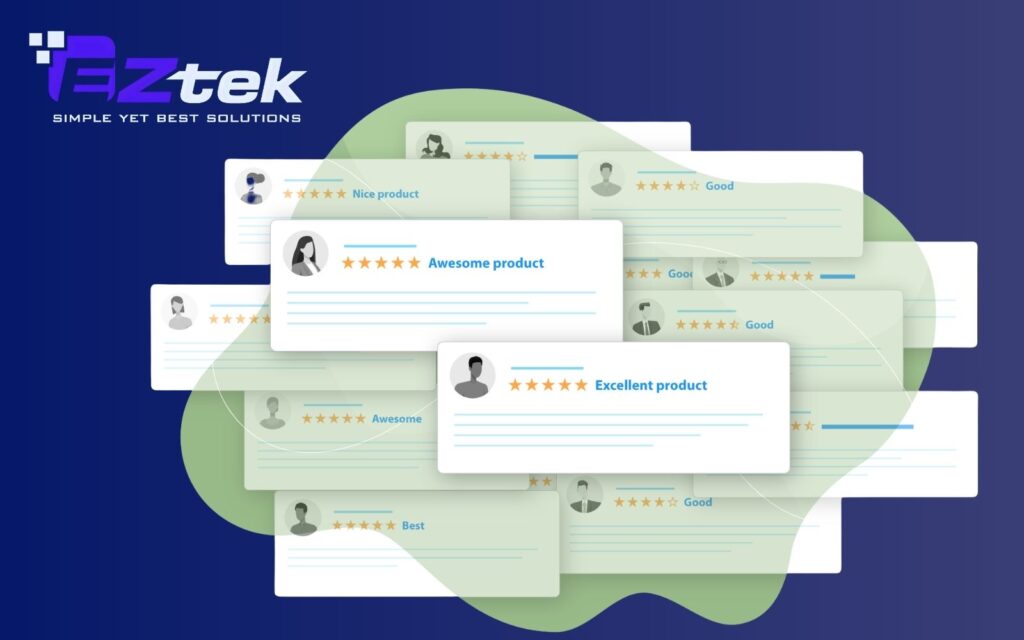
Trust is a non-negotiable element of the ux honeycomb that directly impacts user retention. Credibility is built through transparent design, such as making it easy to cancel a subscription or providing clear, honest instructions. If a brand uses deceptive patterns or ambiguous language, users will quickly lose faith and leave. For instance, an e-commerce site becomes credible when it displays verified customer reviews and clear return policies prominently.
Desirable
Beyond functionality, a digital product should be aesthetically pleasing and emotionally engaging. Desirability is achieved through visual identity, high-quality imagery, and interaction design that excites the user. When a product feels premium or “delightful” to use, it builds a stronger brand connection. Apple’s interface is a prime ux honeycomb example of desirability, where sleek animations and minimalist layouts make the technology feel like a lifestyle choice rather than just a tool.
Accessible
Modern design must be inclusive, ensuring that everyone, regardless of physical or mental ability, can use the product effectively. This involves designing for assistive technologies like screen readers and considering environmental constraints, such as high-contrast modes for outdoor use. An example is providing closed captioning on videos, which serves both the hearing-impaired and someone watching a clip in a quiet public space without headphones.

Valuable
The ultimate goal of the ux honeycomb method is to deliver value to both the end-user and the business. A valuable product provides a clear return on investment, whether that is saving time, providing entertainment, or solving a complex task. For example, ride-sharing apps like Uber offer immense value by connecting drivers and passengers in real-time, providing a service that is more convenient and reliable than traditional methods.
Findable
Findability ensures users can quickly locate information, content, or features when they need them. In the UX Honeycomb method, this facet is closely tied to information architecture, search functionality, and navigation design. Well-structured menus, filters and meaningful labels help users move confidently through a product. A good example is an e-commerce site where products are easy to discover through categories and smart search suggestions.

Principles for effectively using the UX Honeycomb
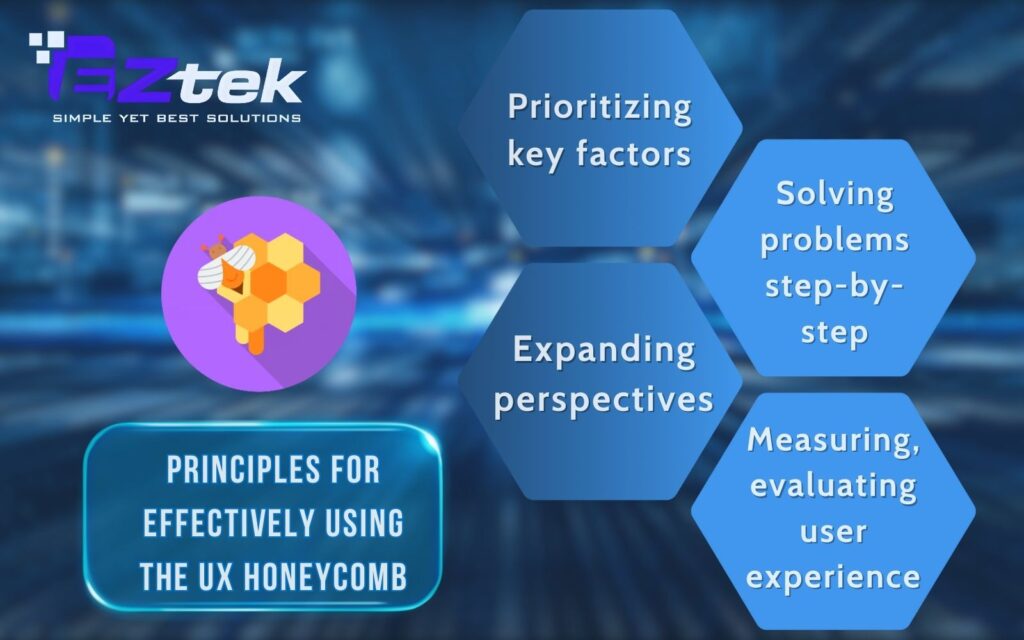
Rather than a rigid checklist, the UX Honeycomb should be treated as a flexible thinking framework that guides better design decisions.
- Prioritizing key factors: Not all facets of the UX Honeycomb carry equal importance in every project. Teams should identify which factors matter most based on user needs, product goals, and business context, then focus design efforts accordingly.
- Solving problems step-by-step: The UX Honeycomb works best as an iterative method. Designers can evaluate each facet, identify weaknesses, and improve them gradually through testing, feedback, and refinement instead of attempting to perfect everything at once.
- Expanding perspectives: This model encourages collaboration across roles such as UX designers, developers, marketers and stakeholders. Using the UX Honeycomb as a shared framework helps align different perspectives around a common understanding of user experience.
- Measuring and evaluating user experience: Each facet can be assessed using appropriate metrics and research methods, including usability testing, analytics, accessibility audits, and user feedback. Continuous evaluation ensures the experience evolves alongside user expectations and business needs.
EZTEK Software – A leading partner in UX/UI design
In the competitive digital landscape, where users form an impression of your product in just seven seconds, having a professional design partner is essential. EZTEK Software is a premier IT consulting and software outsourcing company in Vietnam with over 11 years of experience in delivering high-quality, user-centric solutions. We understand that a successful product must balance business objectives with the seven facets of the UX honeycomb framework, ensuring every interface we build is not only visually stunning but also deeply functional and reliable.

Our comprehensive UI/UX design services are designed to boost user satisfaction by enhancing accessibility and ease of use. At EZTEK, our designers and developers work within the same integrated teams to ensure seamless communication and a smooth transition from vision to code. Our specialized design process includes:
- UX Services: We conduct deep UX research, develop realistic personas, and create detailed wireframes and prototypes to map out intuitive user flows.
- UI Services: Our team crafts captivating visual identities, including custom icon sets, illustrations, and dynamic animations for both mobile and web applications.
- Data-Driven Optimization: To ensure long-term success, we offer A/B testing and heuristic evaluations, using real-world data to refine your product post-release.
Beyond our design expertise, we provide a full suite of digital solutions to help your business stay ahead of the curve.
- Custom software development
- Web and mobile app development
- Artificial intelligence
- QA and testing
- Offshore development centers
- Staff augmentation
- Ongoing maintenance and support
Learn more about UX honeycomb examples
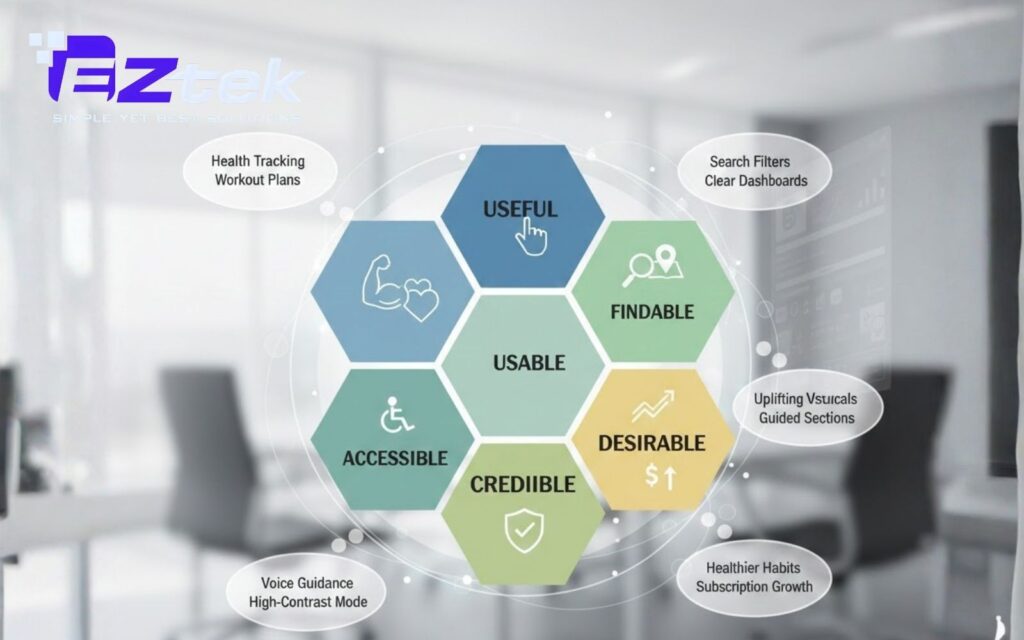
To better understand how the UX Honeycomb works in practice, let’s explore a different scenario: a health and wellness mobile application. This example shows how each facet of the UX Honeycomb model can guide designers in creating a balanced, user-centered experience.
Useful
- Objective: Address real health-related needs.
- Example: The app focuses on features such as daily activity tracking, personalized workout plans, and hydration reminders based on user goals.
- Outcome: By prioritizing features users genuinely need, the product becomes relevant and supportive of healthier daily habits.
Usable
- Objective: Make health tracking simple and stress-free
- Example: Clear dashboards, one-tap activity logging, and guided onboarding help users understand how to use the app quickly.
- Outcome: Users can interact with the app effortlessly, increasing long-term engagement and reducing drop-off rates.
Findable
- Objective: Help users locate features and information instantly.
- Example: Workout plans, progress reports, and nutrition tips are organized into clearly labeled sections with an effective search function.
- Outcome: Users spend less time searching and more time focusing on their wellness goals, improving overall satisfaction.
Credible
- Objective: Build trust in health-related content and data.
- Example: The app references certified health sources, explains data usage transparently, and secures user information through reliable authentication methods.
- Outcome: Users feel confident relying on the app for accurate guidance and safe data handling.
Desirable
- Objective: Create motivation through emotional engagement.
- Example: Clean visuals, uplifting color schemes, progress animations, and encouraging messages make the experience enjoyable.
- Outcome: Users feel motivated and inspired, which strengthens emotional attachment to the product.
Accessible
- Objective: Ensure inclusivity for diverse users.
- Example: Features such as adjustable text sizes, voice guidance, and high-contrast modes support users with different abilities or situational constraints.
- Outcome: The app becomes usable by a wider audience, reinforcing inclusive design principles.
Valuable
- Objective: Deliver benefits to both users and the business.
- Example: Users gain healthier routines, while the business benefits from subscription upgrades and long-term retention.
- Outcome: The app successfully balances user value with sustainable business growth, fulfilling the final facet of the UX Honeycomb.
The UX honeycomb model is more than just a checklist, it is a strategic blueprint for creating digital products that truly resonate with people. Whether you are launching a new startup or refining an existing platform, applying the UX honeycomb framework ensures every design decision serves a meaningful purpose for the end-user. If you’re looking to apply the UX Honeycomb effectively in your next digital product, EZTEK Software is ready to help with expert UX/UI design and end-to-end technology solutions. Contact us now and turn great UX into real business impact!