
Behind every successful product is a clear understanding of the people who use it. Exploring “What is an end user?” helps businesses create solutions that are practical, intuitive, and truly valuable in real-life use. From simple digital tools to complex software systems, end users play a decisive role in product success. In this article, let’s explore this concept together with EZtek Software to gain a clearer and more practical perspective.
What is an end user?
An end user, in the context of technology and software, refers to the final individual who directly uses a product, system, or service to accomplish specific tasks. Simply put, what is an end user can be understood as the person for whom the technology is ultimately created, not those who develop, configure, or maintain it. This definition captures the core meaning of end user – the last point of interaction between a product and its real-world application.
End users interact with software, hardware or digital platforms through their features and interfaces, focusing on functionality rather than technical complexity. Their technical skills may vary greatly, from beginners to highly experienced users, which is why understanding what is an end user is critical when designing intuitive interfaces and user-friendly systems that meet diverse needs.

Main characteristics of end users
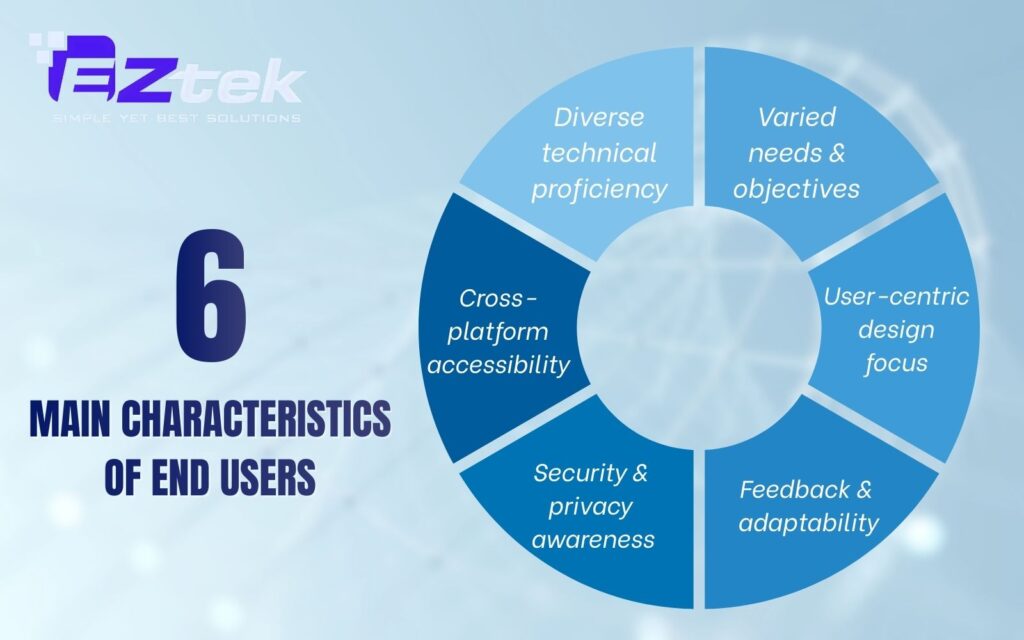
To design high-performing digital tools, it is essential to look beyond basic demographics and identify the core traits that drive user behavior. When analyzing what is end user in software, several defining characteristics stand out that directly influence how these individuals interact with and perceive technology.
- Diverse technical proficiency: End users possess varying levels of digital literacy, ranging from tech-savvy experts to complete beginners. Developers must ensure interfaces are accessible and intuitive for this wide spectrum of technical expertise.
- Varied needs and objectives: Individuals interact with products to achieve specific goals, whether it is simple data entry or complex professional workflows. Success depends on tailoring features to meet these diverse functional requirements and personal preferences.
- User-centric design focus: End users value clear interfaces, intuitive navigation, and efficient workflows. A strong focus on usability ensures the product feels practical and easy to adopt.
- Feedback and adaptability: Real-world interaction leads to valuable feedback that helps developers refine and evolve the product over time. Continuous updates based on user input are essential for keeping the technology relevant and effective.
- Security and privacy awareness: Modern end users expect their data to be protected and handled transparently. Trust is built through reliable security measures and clear privacy practices.
- Cross-platform accessibility: Users expect a consistent and reliable experience whether they are working on a desktop, tablet, or mobile device. Providing seamless cross-platform functionality allows them to transition between devices without interrupting their workflow.
Types of end users?
Not all end users interact with technology in the same way or for the same purpose. Based on usage frequency, technical skill, and expectations, end users can be grouped into several distinct categories.
Casual users
Casual users typically engage with a product for routine, general-purpose tasks without needing to dive into its complex layers. They may not be particularly tech-savvy and simply view the software as a straightforward tool to get a specific job done quickly. For example, a retail store owner might use Microsoft Excel solely to list daily inventory or use Gmail to send basic updates to suppliers.
Intermediate users
Characterized by a functional level of comfort, these users can navigate most features independently or with very minimal guidance. They understand the core logic of the software and utilize it to facilitate more structured professional workflows on a regular basis. A project manager serves as a great example, as they often use Jira or Slack to organize team tasks and generate standard progress reports.
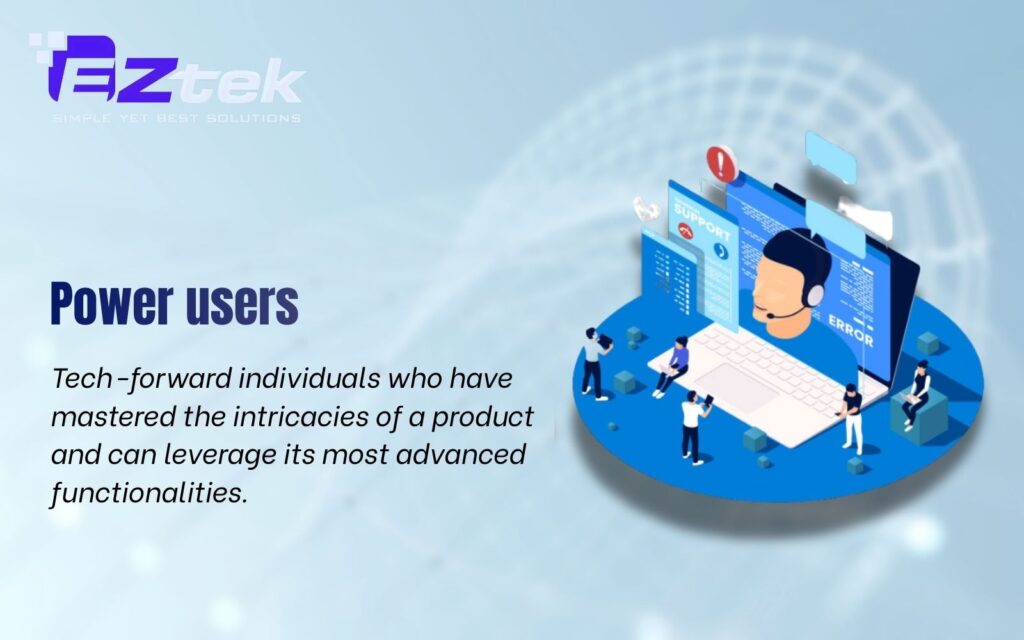
Power users
Power users are tech-forward individuals who have mastered the intricacies of a product and can leverage its most advanced functionalities. They are often experts in their field who push the software to its limits to achieve highly complex or automated outcomes. For instance, a data scientist might use advanced formulas, pivot tables, and macros in Excel to build predictive models and analyze massive datasets.
Specialized users
Driven by unique professional requirements, specialized users rely on industry-specific tools designed for highly technical or niche environments. Their interaction with technology is often deep and precise, requiring software that caters to the complexities of their particular field. For example, a Software Quality Assurance (QA) analyst uses specialized bug-reporting tools like BetterBugs to document technical glitches and ensure system stability before a product launch.
Miscellaneous users
This group encompasses individuals who do not fit neatly into traditional categories, often including one-time users or those with temporary, situational needs. They might interact with a platform only on rare occasions, requiring an experience that is immediately intuitive without any prior training. A clear example would be a traveler who downloads and uses a local ride-sharing app for the first time while on vacation in a foreign city.
How do different end user types differ?
User behavior is not one-size-fits-all, especially when interacting with digital products. Looking at what is an end user through usage patterns and experience levels reveals why different users require different approaches in design and functionality.
| End user type | Technical skill level | Frequency of use | Feature usage | Typical goals | How to identify them |
| Casual users | Low to basic | Occasional | Core, essential features | Complete simple tasks quickly | Use limited functions, minimal customization |
| Intermediate users | Moderate | Regular | Core features + some advanced options | Improve efficiency and workflow | Explore settings, rely on built-in tools |
| Power users | High | Frequent or daily | Advanced, hidden, or complex features | Achieve complex or specialized tasks | Use shortcuts, automation, and customization |
| Specialized users | High (domain-specific) | Task-based | Professional or industry tools | Perform expert-level tasks | Industry-specific workflows and terminology |
| Miscellaneous users | Varies | Infrequent or temporary | Very limited features | One-time or short-term usage | Short sessions, low engagement patterns |
Examples of end users
A common example of an end user can be seen in a customer relationship management (CRM) system used by a company. While developers build the software and administrators manage system settings, the sales representatives who log in daily to track leads, update customer information, and follow up on deals are the true end users. Their ability to navigate the system easily and complete tasks efficiently directly affects productivity and overall business performance, highlighting the importance of designing solutions around real user needs.
Hope that through this comprehensive guide, you have gained a clearer understanding of “What is an end user?” and why their specific needs are the driving force behind every successful product. By identifying the unique characteristics and categories of your audience, you can bridge the gap between technical functionality and a seamless user experience. At EZtek, we are committed to helping you turn these insights into impactful digital realities. If you are ready to create a product that puts your users first, explore our Software Product Development services today and let’s build something extraordinary together.